NOTE: I’m not an investment advisor. This isn’t investment advice. This is my opinion. Take it with as much salt as you care to.
Those of you who aren’t in the stock markets may not even have heard about this, but Cracker Barrel’s share price has tanked recently. There are reasons, and they’re addressing them, but…
…Ah. Yes. I’ve been reminded that some of you don’t have a clue what Cracker Barrel is. Either you’re not from the United States or you live in the wrong part and don’t do road trips. Okay; so let’s start there.
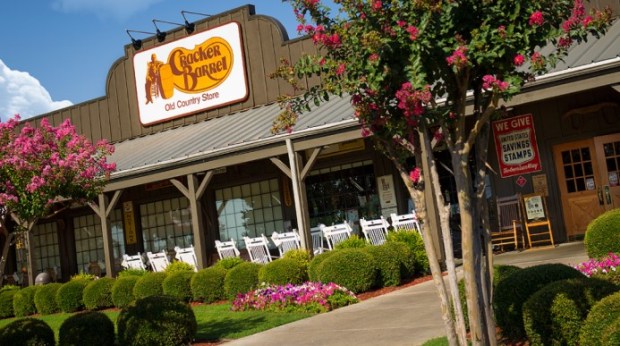
Cracker Barrel is a restaurant that has a built in country store with an old-fashioned theme (hence the name). The walls are covered in antiquey kitsch of dubious value, anything from snowshoes and wooden golf clubs to tinplate advertisements for long-defunct brands. Put a magazine page or an old-style stock certificate in a $10 frame (bought in bulk for $2.45) and hang a $20 price tag from it, and there you have it: Instant decor for sale.
The country store isn’t limited to antiques, mind you; in fact, a lot of customers don’t even realize the wall decorations are for sale. (Which is kind of a problem. But more on that later.) They have a wide variety of old-style candies, small-brew brands of craft soda pop, various toys, clothes, and seasonal decor items, plus the obligatory wall of candles and a front porch full of rocking chairs.
The restaurants are strategically located at major highway intersections, and you’ve got to go through the store to get to your table, so there’s always a ton of traffic. However, a lot of locations are losing relevance due to the decline of in-person retail — no sense having a shop at the outlet malls if nobody’s going to the outlets, after all — and the brand still hasn’t recovered from the hit during early COVID, when Americans started shifting to delivery. Turns out mall sites aren’t terribly convenient for DoorDash, and fried breakfast foods don’t travel very well. (Sawmill gravy, for instance, rapidly hardens into a substance that could be used to patch roofs.)
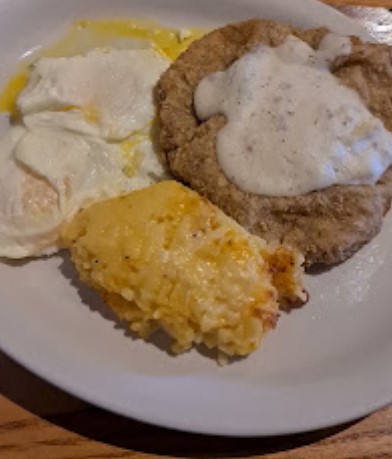
A word about the food: They serve all-day breakfast and the sort of generic quasi-Southern dishes that are popular among truckers and retirees. This is not the place to go for a kale salad with quinoa, and vegan offerings are highly limited. At the same time, however, they’re not a steak house. Menu items tend to be plain fare, high in carbs, protein, and old-timey goodness. Oh, and the tea always tastes strongly of coffee.
Naturally enough, they’re worried about their target demographic dying of old age, leaving no new customers to fill the void.
Which brings us to the business problems… which aren’t really problems per se, at least not yet. The company doesn’t have a ton of debt, and they own rather more locations than they lease. The price-earnings ratio is a semi-healthy 14.59, and the corporate structure is solid enough. Sure, the menu and store are aimed at a shrinking demographic, but it’s the one segment of the populace that still has extra money, so what’s wrong with that?
- There’s a lack of healthy options on the menu. Americans are eating healthier these days, which costs more per serving. Since virtually every breakfast combo comes with a cheese-laden slab of hash-brown casserole, and more than half of the entrees are deep-fried, this isn’t the easy fix one might think. You can’t keep a low price point while improving nutrition.
- The store caters to the elderly, and to conservatives. Admittedly, that’s half the country, and an even larger percentage where the stores are located, but it neatly alienates Millennials. This is where you’d go if you want American flag decor, but their stock of rainbow Pride flags is noticeably scant.
- Service staff is not personally invested in either customer satisfaction or high corporate profits. One down side of locating the cash registers in the store side of the facility is that servers don’t handle their own cashouts, which distances them from the service-to-tip ratio. (The new cellphone payment app is a small assist in that regard.) Further, on-site floor manager numbers were cut during COVID and never restored to the old ratio.
- Corporate is disconnected from the local stores. Menu items and the store’s goods selection are handled centrally, which would be fine if they tended to take into account local sales force recommendations — but they don’t. There are five social media accounts, each of them all but inactive. Corporate advertising is minimal. Thus, the advantages one would expect from a large chain are being canceled out by management inefficiency.
Against that, I’d remind you: Traffic is still coming in, profit margins are still excellent, and overhead costs are low. It’s still a solid business, just declining. That was the message from ECO Julie Fels Massino during an investor call in late May.
Immediately afterward, the stock price, which had been hovering in the mid-to-high $70 range, tumbled to under $40.
Her proposed fixes involved menu revitalization — including a broad test of 20 new menu items across Texas, including turnip greens and hashbrown shepherd’s pie — and a remodel for dozens of older stores through 2025. This is being paid for in part by a massive slash in the dividend payout.
(Small wonder the share price tumbled. But that’s just me opining again.)
One would think that this would be good news for investors. (Well, not the cut in dividends, obviously.) After all, it’s obvious to anyone who can read a balance sheet that their sales never recovered post-COVID, and even though Cracker Barrel isn’t doing any worse than a lot of their competitors, they’re also not adapting at all well to modern conditions.
There are some fairly simple tweaks that have been suggested by various servers and store managers we’ve had the good fortune to speak with, working mainly in locations from Pennsylvania to Florida. Whether they’ll be undertaken — or even considered — by Corporate is another question entirely.
- Stock investment programs for staff. There’s nothing that encourages staff to value corporate profits quite like encouraging them to own a piece of their company. Major brokerage companies like Fidelity Investments handle this sort of things for corporations across the country.
- Local control over menus. Even though breakfast hash was discontinued several years ago, some locations still get calls for it. Certain side dishes are available only for once-a-week specials but could easily be prepared for customers with special dietary requirements. All else aside, a partnership with a brand like Old Glory could put canned greens on the menu at a nominal expense with minimal cost and effort.
- Tea that doesn’t taste like coffee. This is an easy one, but somehow, Cracker Barrel can’t manage it. Since teas and tisanes are a shared interest of the trendy and elderly alike, this one seems like a no-brainer — especially since the shelf life of boxed tea bags is measured in years (or, considering the ones in your cupboard at home, decades).
- Small savings add up. Overburdened wait staff will often leave large stacks of napkins instead of one or two, bring extra condiments, and so on, rather than spend time interacting with their customers. This is also true for lazy wait staff that doesn’t care to bring out a dozen free beverage refills. Any gains in beverage savings are more than exceeded by customer dissatisfaction, and condiment and napkin losses are often vast compared to payroll expense.
- Quality control. Pre-COVID, most locations maintained a dedicated facilitator at rush times, someone whose job it was to ensure that the proper beverage went with each meal and that trays were directed to the correct tables, often sending a different server for delivery than the one who took the order. These positions are mostly vacant just now, which has resulted (among other things) in customers being served glasses full of sanitizer.
- Reactivate social media accounts. These provide low-cost advertising, customer feedback avenues, and a level of personalization that improves brand loyalty. (“Hi, this is Irma, your Cracker Barrel social media star. No, I’m not A.I. We’re old-fashioned, so we still use human intelligence here.”) Running app-only integrated special offers would be an excellent way to measure return on investment while further popularizing the new software.
- Make it clear that the decor is for sale, and rotate it on occasion. As mentioned, a lot of the customers think the tiny paper price tags on the wall and ceiling decor are just part of the decorating theme, and they rarely sell. However, one location held a yard sale not long ago as part of their renovations process, and they sold out of decor kitsch in half an hour. They shipped in more and promptly sold out again. Clearly, this is an underutilized revenue stream.
The bottom line:
If your retirement account used to be funded by those massive Cracker Barrel dividends, I’m afraid those days are long past, and there’s nothing to be done about it. Even so, if I were you, I wouldn’t sell my shares; they’re still paying something, and as long as the restaurant remains popular, there’s nowhere they can go from here but up.
That does beg the question: Will the corporate revitalization be effective? There’s really only one way to find out — wait and see.
You can send cash to PayPal in order to help support The Not Fake News, set up a subscription donation at Patreon, or buy me a coffee. If you’re into Crypto, I’ll also happily accept DogeCoin, and in fact heartily recommend it since the fees involved are vanishingly small. I mean tiny. Sing out if you want to learn more.
Any complaints about the factual or humorous quality of this article should be directed to: Complaints Department, 1600 Pennsylvania Ave., Washington DC 20500

 The Not Fake News