Some years ago, I was walking through the room while my girlfriend was watching “Supernatural”. Something about the episode caught my attention, and rather to my surprise, I sat down and watched it.
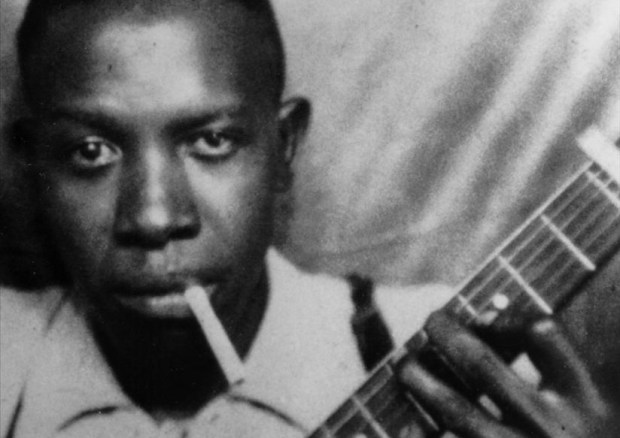
The story happened to be one I know, and know well: that of Robert Johnson, who reputedly sold his soul to the Devil in exchange for his insane talent, playing blues guitar. Now, the television show and the legend were a bit different, and the truth of the matter is stranger still. I’ll tell you all about those in a minute.
But, first, let’s take a moment to consider two things. Bear them in mind while we go on.
First: Robert Johnson knew the story of the crossroads devil from folklore.
Second: Folklore is unreliable, which makes sense because it’s oral tradition handed between narrators.
The story goes this way: Young Robert was listening to Delta blues one night, and during a break picked up one of the performer’s guitars. The noise he produced was anything but musical, and it was soon taken away from him. Embarrassed, he fled.
Some time later — some say a year, but reliable accounts have it at more like three — Robert reappears with a guitar of his own, a six-string with a seventh added. Seems he’d learned to play, and in a way nobody else ever had, nor has since really aside from greats like Clapton. When asked, he grinned and said he’d made a deal with the Devil at the crossroads.
We even know which crossroads: the intersection of Highways 61 and 49. There’s a sign there today with three blue guitars and the word “Crossroads” on it.
But that’s not what happened.
Robert Johnson went back to his hometown, where he met a skilled player named Zimmerman, and he learned. He worked hard and practiced — he later would say in a graveyard late at night, since there the neighbors won’t ever complain
Now, in the show, they have Robert meeting his demise at 27 from a hellhound. The actual history is sketchy, but it’s commonly understood that he went woman-mad after his own wife died in childbirth, and eventually he was poisoned by a justifiably jealous husband — at 27. The story of the Devil and the crossroads comes from an earlier musician, Tommy Johnson (unrelated) from the same area. Robert simply referred to it in his own songs, not unreasonable at all. Best as I can tell, there’s no record of the story being otherwise attached to him until the 1970s.
Take his song, “Crossroad Blues”: “Goin’ to the crossroad, fell down on my knees. Asked the Lord above, ‘Have mercy, save poor Bob, if you please.'” Does that sound like a deal with the Devil to you?
Truth was, Bob Johnson was a troubled man who led a hard life, surrounded by misfortune and tragedy. He composed beautiful, strange music and used metaphor and poetry to communicate his torment — to purge his own personal demons, if you will. We’re fortunate to have a couple of recordings of him.
I mentioned Tommy Johnson. He has a similar story but a longer one. The crossroads tale was added to his legend later on in life in order to build up his stage persona. He also did tricks with his guitar, playing it between his legs and over his head, throwing it in the air and catching it — a practice common to a lot of the early stage performers in the days before microphones. He was a showman.
The origin of the crossroads story? Lost to time, but it predates both Johnsons by centuries. Doctor Faustus is but one example, himself preceded by Theophilus of Adana by a thousand years. Now, all of that is history.
The story itself underlines the lesson: Folklore is unreliable.
But there’s a grain of truth in it, one that persists, if only in the metaphor. In life, we’re given choices. Take one path, you end up a gifted blues musician who gets poisoned to death at 27. Take another, maybe you end up a farmer and dreamer who never did learn the guitar, but you live to ripe old age and raise a large family. Or instead, because you don’t learn to express yourself, you die sooner and miserable, and the world loses the gift that is your musical genius.
One thing I can tell you: If you practice, eventually, even the least talented musician will become merely bad.
Practice sucks up your life, time you could be spending with loved ones. So maybe there is a deal with the Devil involved — a quiet one, with no signature in blood, just a ton of regrets. Who knows?
Not a very satisfying conclusion, is it?
So let me tell you the real purpose of this long monologue: I want to remind you of what folklore was.
On a cold winter’s night, when you’re sitting around the fire because it’s too early to go to bed, and nobody has yet invented television, someone will tell a story. If you’re lucky enough to have a talented storyteller, you could be held spellbound for hours and go to sleep dreaming of witches and silver bullets, black cats and deals with the Devil at the crossroads.
The modern analogue of this is the television serial. That is today’s folklore, just as the radio (and Spotify) contains today’s lyric poetry. (God help us.)
“Supernatural” was researched, drawn from folklore. And it’s passed down to us in the same way, only wholesale instead of from someone who actually cares about us.
Even so, the lesson’s plain as day: Don’t make any deals with the Devil.
You can send cash to PayPal in order to help support The Not Fake News, set up a subscription donation at Patreon, or buy me a coffee. If you’re into Crypto, I’ll also happily accept DogeCoin, and in fact heartily recommend it since the fees involved are vanishingly small. I mean tiny. Sing out if you want to learn more.
Any complaints about the factual or humorous quality of this article should be written in pencil on the back of a $20 bill and mailed to us at the usual address. Feel free to use more than one twenty if you’re feeling verbose.

 The Not Fake News