Common wisdom has it that tariffs in general are bad for trade. They’re old-fashioned. The word “regressive” is thrown around by people who either aren’t certain what it means or really shouldn’t be.
And, in general, the common wisdom is quite correct: Tariffs, as a rule, are bad for business, which means they’re bad for the economy.
Mind you, most business experts will also be happy to tell you why exceptions ought to be made in order to protect their industry, but decidedly no other. Therein can be found the roots of a dirty little secret that most citizens don’t know about, most political partisans don’t care about, and most major media outlets didn’t bother to find out about.
Tariffs are common, and have been right along. In terms of international trade, they are the rule rather than the exception. And no nation on Earth, save possibly China, has a more robust, complex, and highly detailed system of tariffs in place than does the United States of America.
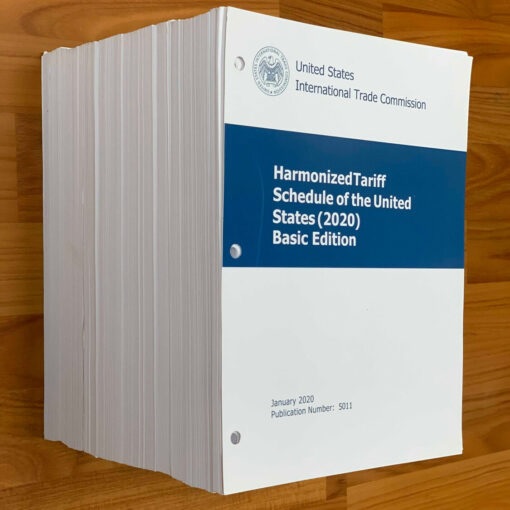
At every border crossing point, there is a shelf upon which rests a set of three-inch thick black folders. Each is filled with pages printed on the sort of cheap paper phone books used to be made from, and with a similar font size. Within are thousands of pages of various items, each with a separate tax entry. There’s one tax for crude oil, another for each of the various refined components and products. There’s a tax on English porcelain (dishes), French cookware, Vietnamese industrial wood pellets, self-sealing stem bolts — any commodity you can imagine and thousands more you cannot. Each tax varies depending on the product’s country of origin. Some items are strictly forbidden.
Consider that last: Cuban cigars. I probably wouldn’t smoke one and neither would you, but the fact remains that you’re not allowed to, and there’s no good reason why not. Oh, sure, when Nixon was president it made sense, but not today. Even our domestic tobacco lobby can’t argue the businesses they represent would be seriously impacted were this senseless ban to be removed, but there it stands regardless: a senseless barrier to trade. A tariff would be an improvement; it would at least serve a purpose, to tax a luxury good consumed only by the wealthy.
Which reminds me: We have tariffs now, and did pre-Trump, for a reason — in truth, a whole plethora of reasons, one for each. That’s not to say these reasons vary all that much. Generally, they can be boiled down into three categories: protecting a domestic industry, a response to another country’s self-protection, or a diplomatic sanction. (The second is the most common, but only because there’s a lot of other countries and only one United States.) The tariff on imported oil serves to keep domestic wells pumping so long as the market price on domestic remains a fair amount over $60 per barrel.
When Congress controlled tariffs, domestic businesses tended to bribe Congressmen. Now that it’s the president’s turn, businesses donate to political parties. The more profitable the industry, the bigger the bribes- err, donations, and consequently the more service the government renders.
Again we refer to common wisdom, which is that it’s the customers that pay the price for tariffs, and that’s quite true. Businesses tend to pass all sorts of costs on to consumers, and tariffs are a cost, right enough.
Except it’s only a part of the truth. Sure, if there’s a 100% tariff on bananas, Americans will pay twice as much for bananas at the store. Bananas sell for under twenty cents each, though, and are a tiny line item on the average grocery bill. We don’t generally import milk, though and imported butter is rightly considered a luxury item. In fact, most of our food is grown domestically. If the price of foreign imports goes up, chances are good we’ll just switch over to local varieties for most things.
The same holds with cars, appliances, and most household goods. Sure, Honda makes a fine car, but so does Ford. Four out of five Tesla models are decent electric cars, so why buy Chinese anyway? And, if you can afford a BMW, I’m not here to protect your wallet.
Even articles critical of Trump and his policies state explicitly that some of the cost will be borne by companies (https://www.bnnbloomberg.ca/business/international/2025/02/04/how-do-tariffs-work-who-pays-who-collects-and-more/) and that, in many other cases, they’ll simply be evaded. If no domestic or comparable source is in fact available, and the business will become unable to compete as a result, there exists a relief request process — slow and complicated, but surely better than bankruptcy.
Don’t mistake me: I’m not saying that his claims about the effects, or indeed about anything, are remotely close to being true. Further, it’s both obvious and readily apparent that the uncertainty generated by his chaotic moves have removed several trillion dollars in value from American markets (https://www.cnbc.com/2025/04/28/trumps-first-100-days-are-the-worst-for-the-stock-market-since-nixon.html). This is not good for American businesses.
What it is good for, however, if maintained long-term, is American production. As a nation, we are presently dependent on Taiwan and mainland China for much of our microchip supply. However, in a shift beginning under Trump I and encouraged by a Biden funding initiative, major manufacturers are investing in domestic chip factories (https://www.cbsnews.com/texas/news/nvidia-plans-to-invest-in-two-new-chip-factories-in-texas/), the first of which are already online. High tariffs on imported components will only encourage this — though, to be sure, the most modern manufacturing equipment is partly assembled in the Netherlands, and will thus be subject to tariffs as well.
Still, as domestic chip manufacture is vital to national security (https://www.theregister.com/2021/02/12/supermicro_bloomberg_spying/), this must be considered a positive on both gross and net terms.
Thus far, we’ve shown that those who mock tariffs in general are, as is usual, oversimplifying, and that those who use this to mock Trump are doing so in opposition to the facts. However, it is certainly true that the President’s current methods are, rather than helping anyone, dangerously destabilizing financial markets, especially domestically.
There remain two aspects to consider.
First, proponents of Madman Theory will claim that Trump’s methods are driving negotiations in favor of the United States. This is certainly arguable. It’s true that a lot of nonsense can be swept off the table at the outset using these tactics — but can it possibly be worth the price?
Second, the government of the United States is heading at high speed toward a fiscal cliff. For the first time since the Revolution, the interest on the debt is a major funding item. Expenses are such that, even by cutting the entire defense budget and all discretionary spending, we’d still not have enough to pay the bills. The only way to continue is to cut spending and raise taxes. Democrats keep saying that what they want is increased taxes on businesses and the wealthy.
Since Social Security is almost fully funded, that leaves Medicare and Medicaid — which, combined, have a deficit greater than the cost of fielding eleven nuclear aircraft carriers complete with fighters and a full support fleet. That’s just the deficit, mind you; the overall cost is far higher. Mind you, we can’t very well stop hospitalizing our retired and disabled population, and even in these modern cost-cutting days it would be considered the height of bad form to commission roving euthanasia squads. But surely there must be other ways of reducing expenses.
That aside, it remains true that the simplest way to tax businesses and those who own the largest share of them is a direct tariff. No new laws need be passed, and over time the impact on the domestic manufacturing sector can only be positive. The projected income would be in the hundreds of billions annually, which is not chump change. Yes, reciprocal tariffs will also harm domestic exports — but at a time when we import more than we export, this is a net gain for us.
Let us then pose the question: Why, precisely, do Democrats oppose tariffs?
Do you? If so, why, exactly?
You can send cash to PayPal in order to help support The Not Fake News, set up a subscription donation at Patreon, or buy me a coffee. I’ll also happily accept DogeCoin, and in fact heartily recommend it since the fees involved are vanishingly small. I mean tiny. Sing out if you want to learn more.

 The Not Fake News